 :
:  :
: 
How AI Agents Control Logistics Parks in 2026
Beyond the Hype: How AI Agents are Actually Running Logistics Parks in 2026
Estimated reading time: 9 minutes
Key Takeaways

- AI agents are transforming logistics parks into intelligent ecosystems.
- Dynamic resource allocation reduces idle machinery and optimizing manpower.
- Route optimization enhances fuel efficiency and timely deliveries.
- Predictive maintenance prevents downtime and improves safety measures.
- Companies implementing AI see measurable efficiency and sustainability gains.
Table of Contents
- Introduction
- The Logistics Challenge: Why AI Became Essential
- Key Roles AI Agents Play in Running Logistics Parks
- Real-World Examples: AI Agents in Action
- Step-by-Step: How AI Agents Manage a Typical Logistics Park Day
- Benefits and Best Practices for Implementing AI Agents
- The Future: What Lies Ahead for AI in Logistics Parks
- FAQ
- Conclusion
Introduction
Artificial intelligence (AI) has long been heralded as a game-changer in the logistics sector. But beyond the hype: how AI agents are actually running logistics parks in 2026 is where the true story unfolds—a world where intelligent systems autonomously manage entire logistics operations with remarkable efficiency and precision. Gone are the days when AI was merely an experimental automation tool; today, AI agents have become the backbone of smart logistics parks globally, from Mumbai’s sprawling transport hubs to Chicago’s distribution centers.
In 2026, logistics parks are not just automated warehouses; they are sophisticated ecosystems synchronized by AI, leveraging data from the Internet of Things (IoT), advanced robotics, and real-time analytics. This transformation drives improvements in speed, cost reduction, environmental sustainability, and reliability. But what does it really mean for the industry? How do AI agents operate beyond the buzzwords and marketing promises? This article dives into the practical applications, benefits, challenges, and future of AI-powered logistics parks, with a particular focus on how these intelligent systems have reshaped operations worldwide.
Whether you are a logistics operator, supply chain manager, or technology enthusiast curious about AI’s practical side in logistics, keep reading to explore the realities underpinning this revolution.
The Logistics Challenge: Why AI Became Essential

The growth of e-commerce, global trade complexities, and consumer demand for fast delivery have placed unprecedented pressure on logistics parks. According to recent industry reports:
- Global warehouse automation investments have grown by over 35% annually since 2020.
- Delivery times have shrunk by 25%, increasing the need for real-time coordination.
- Logistics-related carbon emissions contributed to nearly 8% of global greenhouse gases in 2024.
These trends reveal acute pain points: congestion, resource underutilization, asset breakdowns, and environmental strain. Traditional manual or rigid automation systems reached their limits. This gap created the perfect opportunity for AI agents to transcend simple automation and introduce autonomy, adaptability, and predictive power into logistics park management.
Key Roles AI Agents Play in Running Logistics Parks
Here is a detailed look at the essential roles AI agents fulfill in logistics parks today:
- Dynamic Resource AllocationAI systems continuously monitor shipment flows, storage occupancy, and workforce availability. By predicting bottlenecks and peak activity windows, AI agents reassign forklifts, automated guided vehicles (AGVs), and human operators in real time. This results in:
- Reduced idle machinery.
- Optimized manpower deployment.
- Increased throughput accuracy.
- Route Optimization and Fleet ManagementIntegrating GPS data, traffic forecasts, and weather patterns, AI agents autonomously route delivery trucks and pick-up fleets. This optimizes fuel efficiency and ensures punctual arrivals by:
- Avoiding congested or hazardous routes.
- Scheduling preventative vehicle maintenance to minimize breakdown risk.
- Coordinating multi-stop deliveries dynamically.
- Predictive Maintenance and Asset Health MonitoringAI-powered sensors on conveyors, cranes, and sorting machines monitor vibration, temperature, and operational load. Predictive analytics generate alerts before malfunctions occur, preventing costly downtime and enhancing safety.
- Inventory Management and Demand ForecastingLeveraging historical sales, market trends, and seasonal factors, AI forecasts demand shifts. It autonomously adjusts reorder points and optimizes stock rotation, ensuring:
- Timely availability of goods.
- Minimization of excess inventory.
- Smoother warehouse workflows.
- Safety and Compliance EnforcementAI vision systems detect safety violations, monitor hazardous areas, and verify that personnel follow protocols. Simultaneously, AI agents track compliance with evolving environmental and labor regulations, adjusting workflows to maintain standards automatically.
Real-World Examples: AI Agents in Action
Several logistics parks globally provide a glimpse into AI agent-powered transformation:
- Prologis, USA: Their logistics hubs use AI-driven fleet management and warehouse robotics that have cut average shipment processing time by 22%, reducing carbon emissions by 15% through optimized energy use.
- Flipkart Warehouse, India: Incorporating AI agents for predictive inventory and demand forecasting, Flipkart achieved a 30% reduction in stockouts during peak sales seasons.
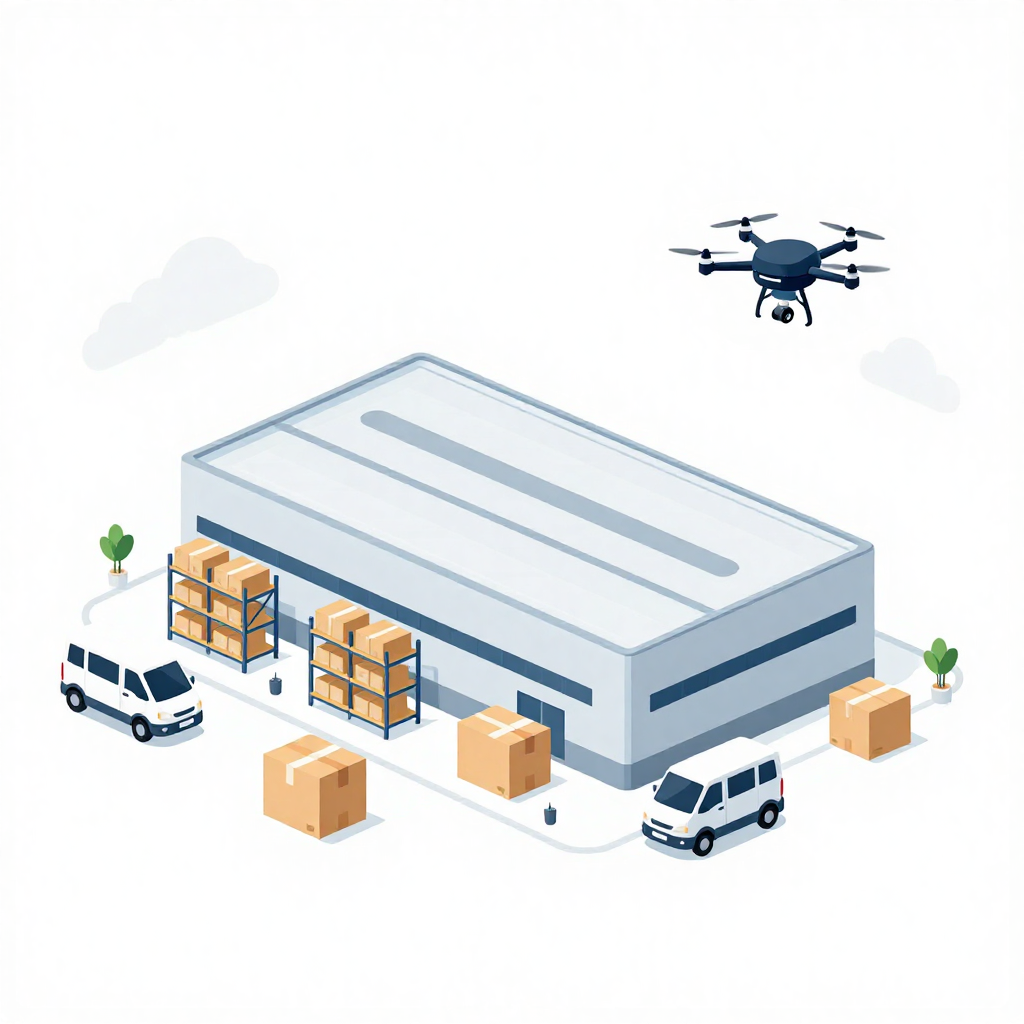
- DPD Germany: AI agents control drone-assisted inventory checks and autonomous delivery vehicles, enabling 24/7 operations with minimal human oversight.
- Alibaba Logistics Park, China: The park utilizes AI for dynamic resource reallocation, resulting in a 40% increase in throughput during peak times and minimized operational costs.
These examples reflect diverse industries and approaches but share a common theme: practical AI applications driving measurable efficiency and sustainability gains.
Step-by-Step: How AI Agents Manage a Typical Logistics Park Day
Understanding the daily operation helps demystify the AI agents’ capabilities. Here’s a simplified process breakdown:
- Data Gathering: IoT devices and internal systems feed AI agents real-time data on inventory levels, shipment arrivals, vehicle status, and environmental conditions.
- Demand Forecasting: AI computes expected inbound/outbound volumes using data trends combined with external signals like weather or market info.
- Resource Scheduling: Forklifts, AGVs, dock doors, and workforce are dynamically allocated to expected tasks, balancing efficiency and safety.
- Execution & Monitoring: AI orchestrates physical movements—dispatching robots, routing trucks, and overseeing loading—with continuous feedback loops.
- Predictive Maintenance Alerts: Sensor analytics trigger early warnings for equipment checks or replacements.
- Issue Resolution: If disruptions occur (e.g., truck delay, equipment failure), AI agents re-optimize schedules and reroute resources autonomously.
- Compliance Checks: The system ensures all activities adhere to operational, safety, and environmental regulations.
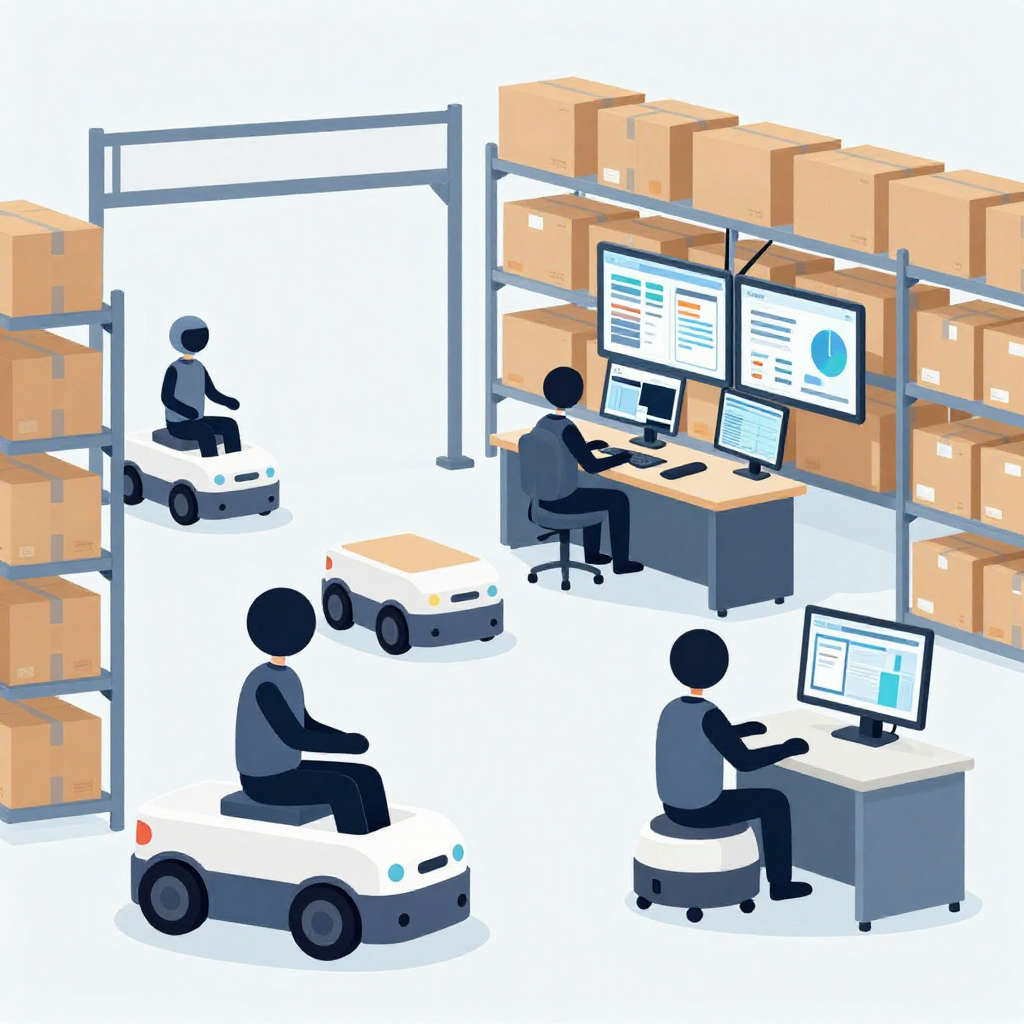
- Reporting and Insights: Supervisors receive actionable insights via intuitive dashboards and can interact with AI agents through natural language for queries.
Benefits and Best Practices for Implementing AI Agents
Adopting AI agents in logistics parks offers several advantages:
- Increased Productivity: Continuous optimization reduces downtime and boosts throughput.
- Cost Savings: Efficient energy use and asset management cut operational expenses.
- Enhanced Customer Satisfaction: More reliable and faster deliveries improve service quality.
- Sustainability: AI’s precision reduces waste, emissions, and resource overuse.
- Workforce Empowerment: Human supervisors shift to strategic tasks, supported by AI insights.
Successful implementation tips include:
- Investing in robust IoT infrastructure.
- Prioritizing data security and privacy.
- Providing workforce training on AI-human collaboration.
- Ensuring transparency in AI decision models.
- Piloting projects before full-scale rollout.
The Future: What Lies Ahead for AI in Logistics Parks
Looking beyond 2026, several advances are anticipated:
- Expanded AI Collaboration: Multi-agent systems coordinating entire supply chains from raw materials to final delivery.
- AI-driven Circular Logistics: Intelligent recycling and reverse logistics integrated seamlessly.
- Quantum AI Optimization: Ultra-fast decision-making becoming routine.
- Human-AI Hybrid Teams: Enhanced interfaces for natural, intuitive cooperation.
- Greater Focus on Ethics: Responsible AI design featuring bias mitigation and equitable access worldwide.
Logistics parks will evolve not only as hubs for goods but as centers of innovation, sustainability, and resilience powered by AI intelligence.
FAQ
Q: Are AI agents replacing human jobs in logistics parks?
A: No. AI agents automate repetitive tasks but primarily empower human managers to focus on strategic and creative roles.
Q: How secure is data used by AI agents in logistics?
A: Leading logistics operators implement multi-layer cybersecurity measures and comply with data privacy regulations to protect sensitive information.
Q: Can smaller logistics parks afford AI agent implementation?
A: Costs are decreasing with scalable cloud AI platforms, making solutions accessible to medium and small operators with clear ROI.
Q: What skills do workers need to collaborate with AI agents?
A: Skills include AI literacy, data interpretation, decision-making, and adaptability to new technology interfaces.
Q: How do AI agents improve environmental sustainability?
A: By optimizing routes, energy use, and inventory accuracy, AI reduces waste, emissions, and unnecessary resource consumption.
Conclusion
Beyond the hype, AI agents are actively and effectively running logistics parks in 2026, shifting the narrative from futuristic speculation to present-day operational reality. Through autonomy, real-time data integration, and intelligent decision-making, AI agents increase efficiency, cut costs, and promote sustainability—all while working alongside humans rather than replacing them. As logistics parks continue to embrace these technologies responsibly, the future of supply chains looks smarter, greener, and more resilient than ever before.
Ready to bring AI intelligence to your logistics operations? Contact us today!
Recent Blog

Top Logistics Trends Every D2C Brand Must Know in 2026
Top Logistics Trends Every D2C Brand Should Know in 2026:…
How Generative AI Cuts Logistics Costs with Smart Automation
How Generative AI Is Reducing Logistics Costs: Unlocking Smart Automation…
Dark Stores vs Warehouses: Who Wins in 2026 Quick Commerce?
Dark Stores vs Warehouses: Which Model Wins in 2026? Estimated…
