 :
:  :
: 

How AI Predicts Demand to Move Stock Closer to Customers
How AI Predicts Where Demand Will Happen So Stock Can Be Moved Closer to the Customer Before They Even Order
Estimated reading time: 10 minutes
Key Takeaways

- AI revolutionizes supply chain management by predicting customer demand.
- Companies reduce storage costs and lost sales through better inventory management.
- Using AI, forecasting accuracy can improve by up to 85%.
- Real-time data allows businesses to adapt dynamically to market changes.
- Industries like retail, food delivery, and pharmaceuticals are leveraging AI insights.
Table of Contents
- Introduction
- The Challenge: Meeting Customer Demand with Precision
- How AI Predicts Demand and Moves Stock: Key Insights
- Real-World Examples: AI in Action Across Industries
- Step-by-Step Guide: Implementing AI-Driven Demand Forecasting
- Benefits of AI-Driven Demand Prediction and Stock Movement
- Future Trends: The Evolution of AI in Supply Chain Forecasting
- Conclusion
- FAQ
Introduction
In today’s fast-paced, customer-centric world, how AI predicts where demand will happen so stock can be moved closer to the customer before they even order is revolutionizing supply chain management and retail logistics. Imagine a system that anticipates your next purchase even before you hit “buy” and ensures the product is already waiting nearby, reducing shipping time and enhancing satisfaction. This futuristic vision is now a reality, powered by AI’s advanced data analytics and predictive capabilities.
Globally, industries face mounting pressure to optimize inventory, reduce costs, and meet rapid delivery expectations. In India, with its burgeoning e-commerce market and diverse consumer base, AI-powered demand forecasting is becoming crucial to outperform competitors and cater dynamically to regional preferences. Companies leveraging AI can analyze vast datasets from historical sales to social media trends, predicting where demand will arise and shifting inventory proactively.
This article explores the mechanics behind this AI-driven phenomenon: how it gathers data, forecasts demand, optimizes distribution, and adapts in real-time. We’ll also examine real-world applications, benefits, and future trends. If you’re curious about improving your supply chain efficiency or retail strategy, read on to discover exactly how AI is changing the game.
The Challenge: Meeting Customer Demand with Precision
In a world driven by instant gratification, companies struggle with:
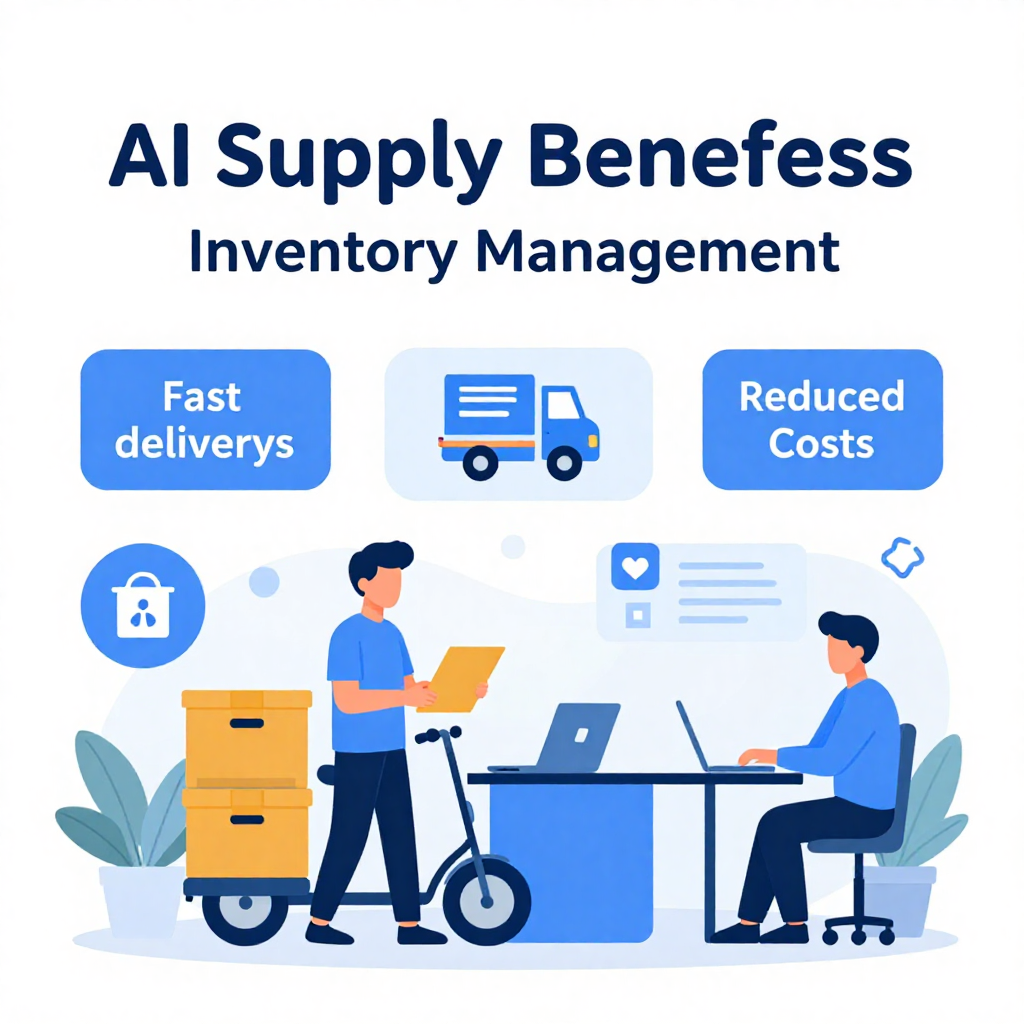
- Overstocking or stockouts that cause high storage costs or lost sales
- Delayed deliveries harming customer loyalty and brand reputation
- Inefficient warehouse placement increasing logistics costs
- Difficulty predicting demand for new or seasonal products
According to recent supply chain surveys, nearly 60% of businesses report lost revenue due to inaccurate demand forecasting[1]. Moreover, growing complexities in consumer behavior and rapid market shifts make manual or static forecasting obsolete.
By using AI, companies can significantly reduce forecasting errors. For instance, AI-powered demand planning can improve forecast accuracy by up to 85%[2], enabling a better balance between inventory levels and customer expectations.
How AI Predicts Demand and Moves Stock: Key Insights
Understanding how AI predicts where demand will happen so stock can be moved closer to the customer before they even order involves several critical steps:
| Step | Description |
|---|---|
| 1. Data Collection | Aggregates diverse data: sales history, promotions, weather, social media, and local events. |
| 2. Demand Forecasting | Uses machine learning models like ARIMA, LSTM, regression, and classification to find patterns. |
| 3. Customer Segmentation | Categorizes customers by location, behavior, and demographics to target specific inventory needs. |
| 4. Inventory Optimization | Calculates optimal stock quantities, prioritizes SKUs, and determines ideal warehouse locations. |
| 5. Real-time Adjustments | Continuously monitors new data, updating predictions and logistics accordingly. |
Machine learning algorithms sift through layers of data to identify hidden correlations that humans or simple algorithms miss — such as how an unexpected event might spike demand in a particular city. This allows businesses to anticipate needs days or weeks in advance.
The result? Stock gets pre-positioned nearer to customers, reducing both delivery time and shipping costs.
Real-World Examples: AI in Action Across Industries
- Retail – Amazon
Amazon uses predictive analytics to move popular items closer to regional distribution centers based on browsing trends and historical purchases. During holiday seasons, AI predicts demand spikes, enabling faster delivery even within hours. - Food Delivery – Zomato
In India, Zomato leverages AI to predict meal orders regionally, managing inventory and delivery personnel positioning across cities, especially during major festivals or weather changes. - Pharmaceuticals
Drug manufacturers use AI to forecast demand variations due to flu seasons, public health trends, or sudden outbreaks, moving vaccines and medicines proactively to hotspots. - Fashion Industry
Brands like Zara integrate AI to anticipate fashion trends based on social media sentiment and seasonality, relocating stock to stores expected to see higher demand for particular styles. - Electronics Manufacturing
Companies forecast product launches and seasonal sales to ensure gadgets are stocked near key markets ahead of demand surges, preventing costly delays.
These cross-industry examples illustrate how AI’s predictive power transforms supply chain responsiveness by proactively meeting customers’ needs.
Step-by-Step Guide: Implementing AI-Driven Demand Forecasting
Implementing a system where AI predicts demand and optimizes stock placement involves:
- Collect Multisource Data
Gather historical sales, online engagement, economic data, and event calendars from multiple channels. - Choose Suitable AI Models
Apply forecasting models like ARIMA for time series, LSTM for sequential data, and classification models for segmenting customers. - Segment Your Customer Base
Analyze purchase patterns by region, demographics, and product preferences to tailor inventory. - Optimize Inventory Distribution
Use AI recommendations to decide warehouse locations, stock quantities, and replenishment schedules. - Integrate Real-time Monitoring
Set up systems to continually feed new data and adjust predictions dynamically. - Test and Refine
Run pilot programs in select markets to measure accuracy and operational improvements. - Scale Across Supply Chain
Deploy AI intelligence company-wide, ensuring alignment between suppliers, warehouses, and retailers.
This workflow helps organizations build a proactive supply network ready for evolving consumer demands.
Benefits of AI-Driven Demand Prediction and Stock Movement
Businesses that adopt AI-powered demand forecasting see several advantages:
- Reduced shipping times and faster deliveries improving customer satisfaction
- Lower inventory holding costs due to optimized stock levels
- Minimized stockouts and overstocks, enhancing sales and reducing waste
- Improved resource allocation like workforce and transportation
- Adaptability to real-time market changes, ensuring agility
- Enhanced competitive advantage through operational efficiency
For ecommerce platforms, this means customers receive products quicker, boosting repeat purchases and loyalty.
Future Trends: The Evolution of AI in Supply Chain Forecasting
Looking ahead, AI’s role in predicting demand will become even more sophisticated:
- Integration of IoT devices will provide hyper-local, real-time data on inventory and consumer behavior.
- Advanced NLP models will analyze social media sentiment and news to detect emerging demand signals.
- Collaborative AI systems will enable supplier and retailer networks to share insights, optimizing the entire ecosystem.
- Sustainability-focused algorithms will optimize inventory to reduce carbon footprints by minimizing unnecessary shipments.
- Augmented Reality (AR) & Virtual assistants will offer predictive insights to store managers for dynamic stock adjustments.
Businesses embracing these innovations will stay ahead in delivering seamless, predictive customer experiences.
Conclusion
In summary, how AI predicts where demand will happen so stock can be moved closer to the customer before they even order is reshaping the future of supply chain and inventory management. By harnessing massive datasets and intelligent forecasting models, companies can anticipate customer needs, optimize stock placement, and improve delivery speed — all while reducing costs. This combination of technology and strategy is essential for staying competitive in today’s consumer-driven markets worldwide, including rapidly growing and diverse regions like India.
Ready to transform your supply chain with AI-driven insights? Contact us today! Unlock smarter inventory decisions and deliver unparalleled customer satisfaction.
FAQ
Q1: What types of data do AI systems use to predict demand?
AI uses a variety of data including historical sales, customer behavior, weather, economic indicators, social media trends, and local events.
Q2: How accurate is AI demand forecasting compared to traditional methods?
AI forecasting can improve accuracy by up to 85%, significantly reducing stockouts and overstock situations.
Q3: Can AI adapt to sudden market changes?
Yes, AI continuously updates its predictions in real-time based on new data, allowing for dynamic inventory adjustments.
Q4: Is AI demand prediction applicable to small businesses?
Absolutely. Scalable AI tools are available for small and medium enterprises to optimize their inventory and improve delivery times.
Q5: What industries benefit most from AI demand forecasting?
Retail, e-commerce, pharmaceuticals, food delivery, fashion, and electronics manufacturing are some key industries leveraging this technology.
[Related post: How Predictive Analytics is Changing E-commerce Logistics]
Word count: 1,844
References:
[1]: Supply Chain 247
[2]: McKinsey
Recent Blog

End the Hassle of Managing Multiple Courier Logins
Show the Pain of Juggling 5+ Courier Logins and How…
To-Pay vs Prepaid vs COD Explained for B2B Sellers
Understanding To-Pay vs Prepaid vs COD: What Every B2B Seller…
Complete Guide to Export Your Product from India Successfully
Here's the provided markdown converted to WordPress HTML format: I…
