 :
:  :
: 
🚛 From Goods to Delivery — The Full Journey Inside a Logistics Park
From Goods to Delivery: Understanding End-to-End Supply Chain at a Logistics Park
When businesses hand over their products to a logistics partner, the journey is far from over—it is just beginning. Modern logistics parks have evolved into complex ecosystems that manage not just storage, but procurement support, packing, consolidation, shipping, and even last-mile coordination. Understanding what happens once goods arrive at a logistics park can give companies deeper visibility, reduce anxiety, and help optimize their supply chain planning.
In this article, we walk you through the complete flow—from the moment goods arrive to the moment they reach the final customer.
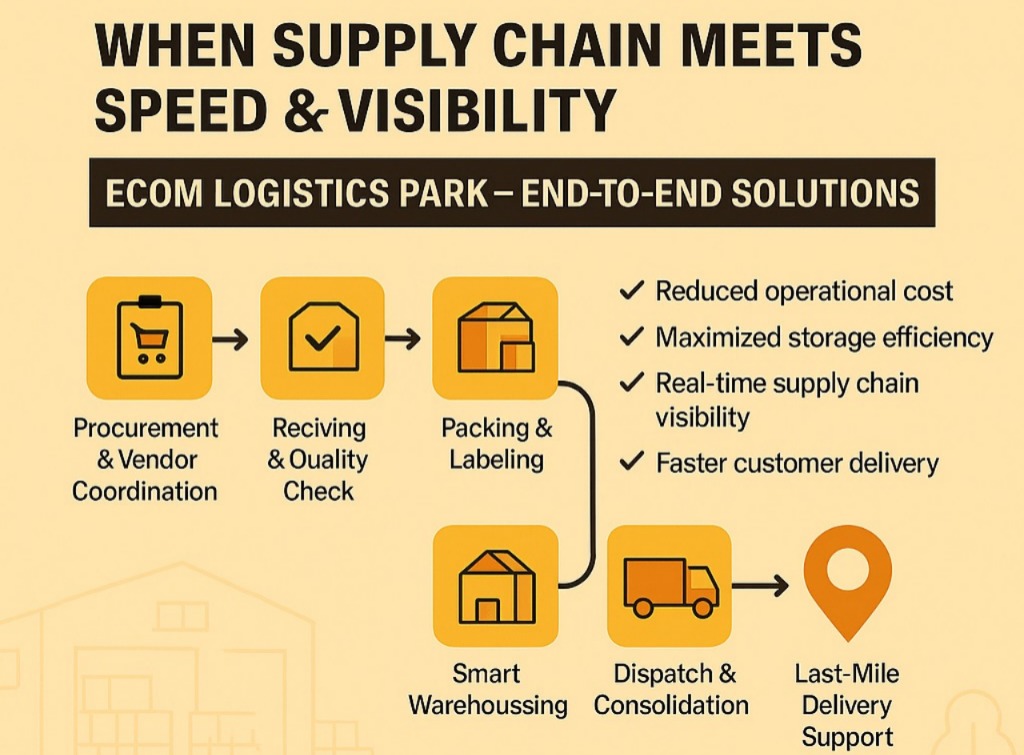
1. Procurement & Vendor Coordination – Starting Before Goods Arrive
In many cases, logistics support begins before the product even enters the warehouse.
A logistics park often:
-
Coordinates with suppliers
-
Manages inbound schedules
-
Supports procurement documentation
-
Facilitates customs or compliance checks (for imports)
Why this matters:
A well-coordinated procurement and inbound plan ensures goods arrive on time, cost-effectively, and with complete visibility, preventing stockouts or storage overflow.
2. Receiving & Quality Validation – Making Every Shipment Count
Once goods reach the logistics park, they go through:
-
Verification against purchase documentation
-
Barcode or RFID tagging
-
Visual and quantity checks
-
Recording in inventory management software
This stage is critical. Incorrect quantities, damaged packaging, or mislabeled products can impact not only storage but also delivery timelines.
Efficient receiving ensures full traceability—so you always know what is inside the warehouse and in what condition.
3. Storage & Inventory Management – Where Visibility Meets Efficiency
Logistics parks use:
-
Bulk storage areas
-
Pallet racking
-
Shelving systems for e-commerce items
-
Temperature-controlled spaces for sensitive goods
With digital inventory management:
-
Stock levels update in real time
-
Aging stock is flagged for action
-
Replenishment triggers automatically
Smart warehousing means your inventory isn’t just stored—it is actively managed to maintain value and improve turnover.
4. Packing, Labelling & Kitting – Preparing Goods for Market
Packing today is more than putting an item in a box.
A logistics park may provide:
-
Customized packaging and branding
-
Fragile and high-value packaging
-
Kitting (combining multiple items into a single SKU)
-
Labeling based on destination or platform (e.g., Amazon, Flipkart, retail chains)
This stage shapes first impressions with customers—a critical factor in customer satisfaction and repeat orders.
5. Consolidation & Dispatch – Moving Goods Faster and Smarter
Before goods exit the logistics park:
-
Orders are picked and consolidated
-
Delivery routes are optimized
-
Transport partners are assigned
-
Documentation and compliance are completed
Efficient dispatch management ensures on-time departures, reduced fuel use, fewer touchpoints, and minimized transit risks.
For clients operating in multiple regions, consolidation means lower transportation costs and improved delivery speed.
6. Last-Mile Delivery Support – Completing the Customer Promise
Last-mile is often the most costly and unpredictable part of delivery.
A logistics park can support by:
-
Integrating with delivery partners
-
Providing regional distribution hubs
-
Offering reverse logistics (returns, repairs, re-packing)
-
Enabling COD reconciliation and RTO management for e-commerce
This ensures products reach the customer faster and more reliably, improving brand reputation.
Why Partnering With a Full-Scale Logistics Park Matters
| Traditional Warehouse | Logistics Park |
|---|---|
| Stores goods | Manages entire supply chain |
| Limited visibility | Real-time tracking |
| Manual documentation | Digital and automated |
| No value-added services | Kitting, packing, returns, channel fulfillment |
A logistics park transforms supply chain into a single-window solution, reducing costs, delays, and administrative complexities.
Conclusion: A Seamless Journey Built on Expertise
From procurement coordination to the final mile, logistics parks provide the infrastructure, manpower, technology, and strategic planning required to take products from your suppliers to your customers efficiently and reliably.
For businesses scaling or entering new markets, a logistics partner isn’t just a vendor—it is an enabler of growth.
Recent Blog
End the Hassle of Managing Multiple Courier Logins
Show the Pain of Juggling 5+ Courier Logins and How…
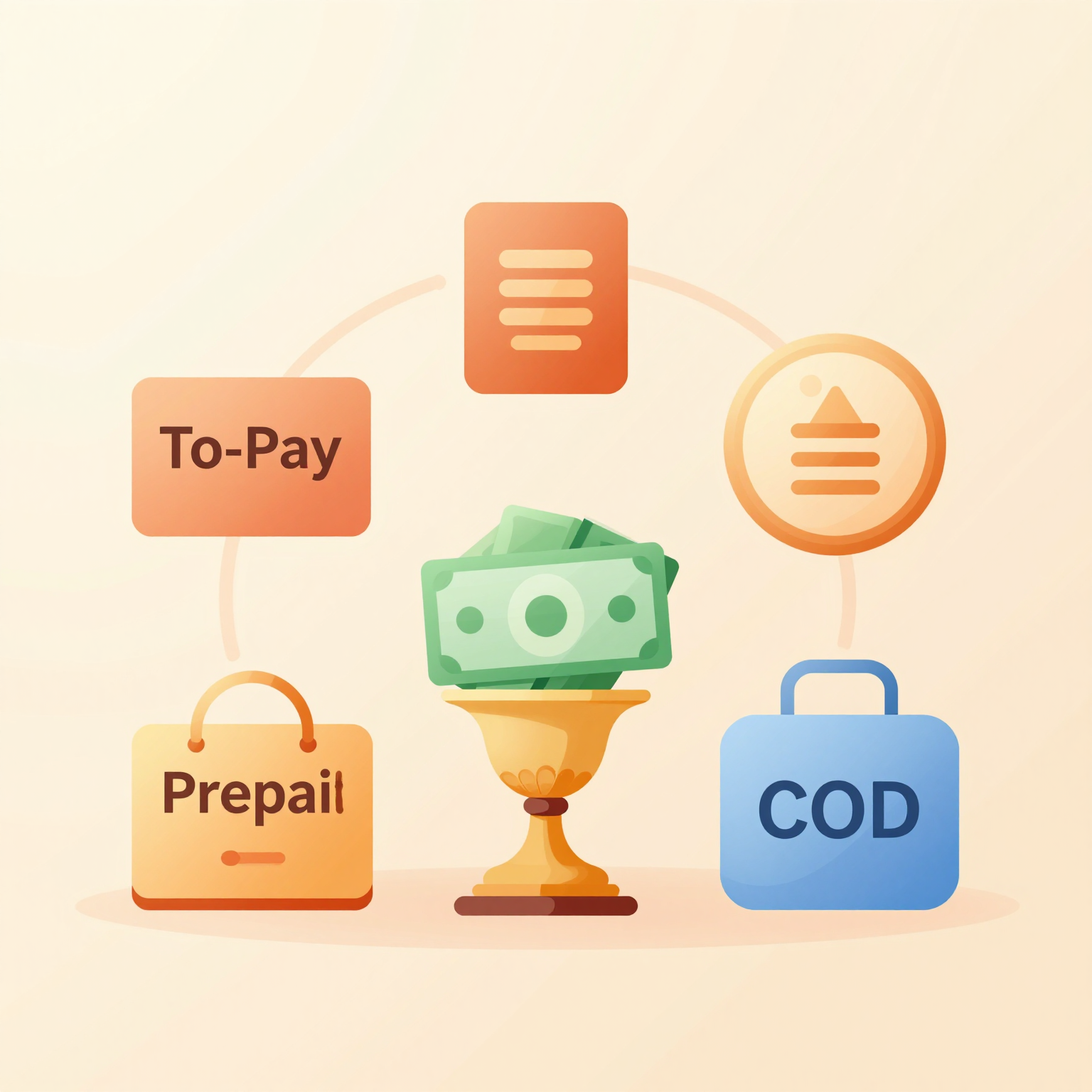
To-Pay vs Prepaid vs COD Explained for B2B Sellers
Understanding To-Pay vs Prepaid vs COD: What Every B2B Seller…
Complete Guide to Export Your Product from India Successfully
Here's the provided markdown converted to WordPress HTML format: I…
